

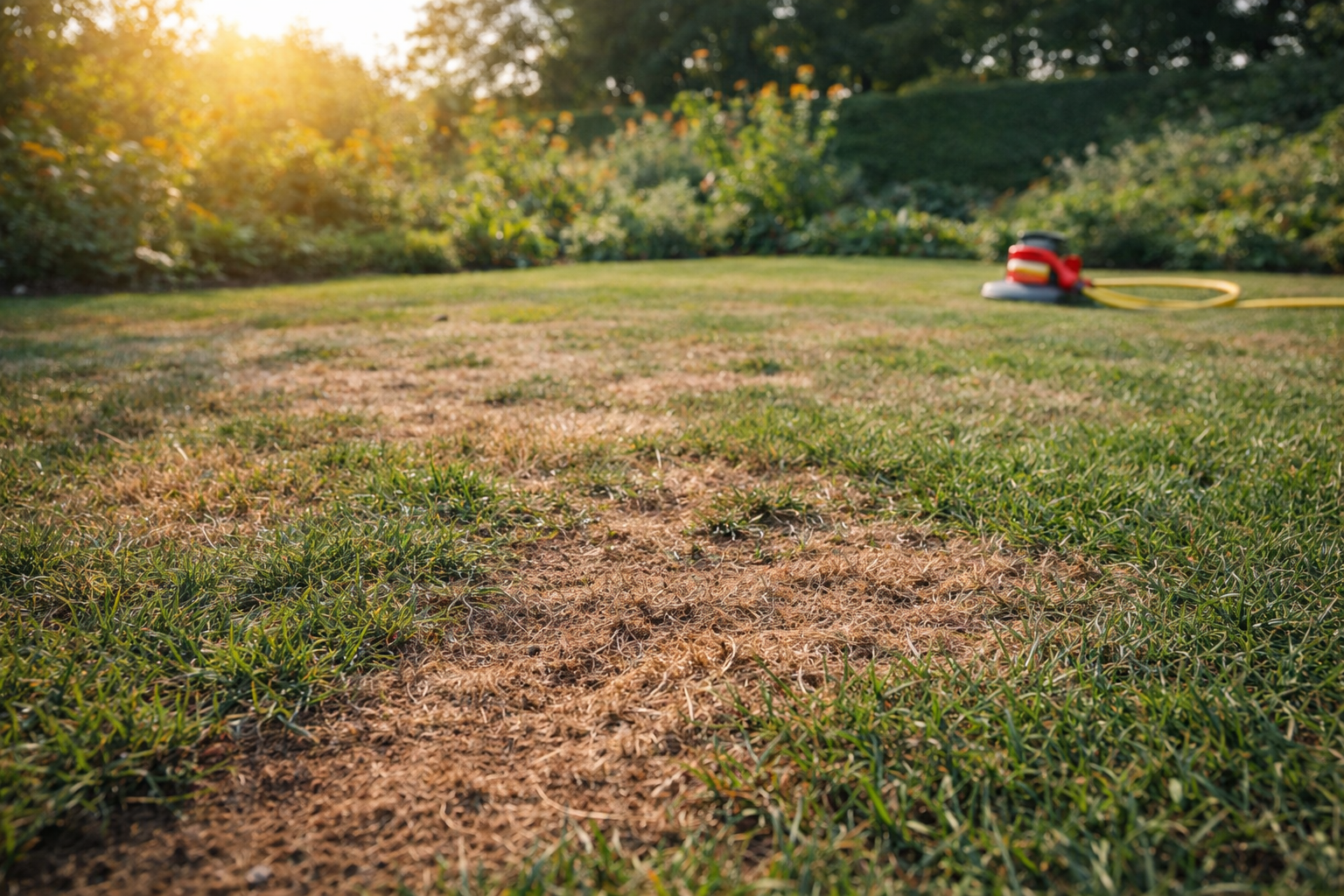
Although the UK climate is generally mild, heatwaves and prolonged dry periods can occur during summer months. These conditions can quickly cause lawns to become dry, patchy, and stressed.
Understanding how to protect your lawn during hot weather can help maintain healthy grass even during difficult conditions.
Grass loses moisture through evaporation when temperatures rise. If rainfall is limited and the soil dries out, grass roots struggle to absorb enough water.
Common signs of lawn drought stress include:
Fortunately, there are several steps homeowners can take to protect their lawns.
One of the most effective ways to protect lawns from drought is watering deeply rather than lightly.
Light watering only wets the surface of the soil, encouraging shallow roots. Deep watering allows moisture to reach deeper soil layers where roots can access it longer.
Water your lawn:
Cutting grass too short during a heatwave increases stress on the lawn.
Keeping grass slightly longer allows it to:
This simple adjustment can dramatically improve drought resistance.
Try to limit heavy foot traffic during hot, dry weather. Grass under stress can easily become damaged.
If your lawn experiences heavy use from pets or children, consider rotating play areas to reduce pressure on one section.
Healthy soil plays a major role in helping lawns withstand drought conditions.
Soils rich in organic matter retain moisture more effectively and support stronger root systems.
Adding professional lawn soil can help improve your lawn’s resilience.
Browse lawn soil products:
https://www.carbuttsturf.co.uk/topsoil
If areas of the lawn become severely damaged during drought, installing fresh turf may be the fastest way to restore your garden.
Order fresh turf online:
https://www.carbuttsturf.co.uk/turf-shop/turf
With proper care and preparation, lawns can recover quickly once temperatures return to normal.
If you need some help on your lawn? You've come to the right place. Just fill out our contact form and we'll in touch to best advise with your project.
© 2016-2023 Carbutts Turf Ltd, All Rights Reserved.
Company registration number 04843520
VAT registration number 819164812


